.avif)
.avif)
.avif)

.avif)
.png)

.avif)

Why paint protection is so important
Car paint is exposed to sun, rain, salt, dirt, bird droppings, and other influences every day, which can cause scratches and damage. Without proper protection, car paint quickly loses its shine with daily use and there is a high risk of swirls and scratches. If you want to keep your car in top condition, it is a good idea to protect the paintwork structurally.
We explain the three best options for paint protection: waxing, coating, or PPF. You will learn how to apply them yourself, what to look out for, and when it is smarter to outsource.
Waxing: the most accessible option
What is wax?
Wax is a protective layer that sits on top of the paint and provides temporary protection against dirt, water, and UV radiation. Wax is inexpensive and extremely easy to apply yourself.
Advantages
- You don't need any specialist knowledge, because it's easy to apply yourself
- Wax is forgiving, because mistakes are easy to fix
- The paintwork immediately gets a nice shine and a water-repellent effect
- Wax is cheap and available almost everywhere
Disadvantages
- The protection provided by wax is limited, lasting approximately 1 to 3 months
- Wax is less resistant to chemicals, bird droppings, resin, and car wash scratches
- With daily use, it is necessary to reapply wax regularly to maintain paint protection
Apply wax yourself
Waxing is the most accessible way to protect your car's paintwork yourself. The process is relatively simple, but the end result depends greatly on the preparation and the way you work. By carefully following the steps below, you will get the most out of a wax treatment.
Step 1: Wash and dry thoroughly
Always start with a complete wash. Rinse all shampoo thoroughly and dry the car completely with a soft microfiber cloth or a cloth with long fibers.
Why this is important:
Dirt, sand, and dust act as abrasives. If you wax over them, you can cause scratches and the wax will not adhere as well. Careful drying with a good cloth ensures that all water residues are removed. Water residues can cause streaks and cause the wax to be applied unevenly.
👉 Tip: use a pH-neutral car shampoo and a clean microfiber cloth to dry the car.
Step 2: Degrease the paintwork
Use a pre-wax cleaner or a light degreaser to prepare the paintwork for waxing.
Why this is important:
Wax adheres better to clean, grease-free paintwork and therefore lasts longer.
👉 Tip: Polishing is the best preparation for degreasing and waxing the paintwork.
Step 3: Apply wax and polish
Apply the wax in thin layers using a good foam applicator pad. Allow the wax to 'set' properly before buffing it out. Setting means allowing it to work in briefly. When the wax becomes matte on the paintwork, it is ready to be buffed out. The exact time varies per product and is always stated on the packaging, but this usually takes a few minutes.
Why this is important:
More wax does not mean more protection. A thin layer adheres better and is easier to polish.
👉 Tip: polish without applying pressure. Too much pressure can cause swirls, especially on dark paintwork.
Step 4: Allow the wax to cure
After waxing, it takes some time for the layer to provide protection. Therefore, avoid rain, car washes, and wet weather for at least 12 to 24 hours.
Why this is important:
Getting wet too soon significantly reduces the life of the wax.
👉 Tip: always wax in dry weather or indoors.
What can you expect from wax?
Wax is ideal for beginners and enthusiasts who regularly care for their cars, but don't expect long-lasting or impact-resistant protection like you get with coatings or PPF.
Coating: better, harder, longer-lasting
What is a coating?
A coating is a liquid layer based on silicon dioxide (SiO₂) or glass coating technology. Once cured, the coating forms a hard layer that protects the paintwork against UV rays, chemicals, oxidation, and light scratches. The quality and durability are much higher than with wax.
Advantages
- Coating provides protection for up to 90,000 km, depending on the product, application, and use
- Coating is water and dirt repellent
- Paint with a coating is easier to maintain due to its hydrophobic effect
- Coating allows for different finishes, such as a deep shine or a matte look
Disadvantages
- Application requires experience and precision
- Applying coating requires experience and precision
- Mistakes such as high spots dry hard and are difficult to repair
- Proper preparation of the paint is necessary for a beautiful end result, such as cleaning, claying, and polishing
Applying a coating yourself
A ceramic coating offers significantly better and longer-lasting protection than wax, but also requires more preparation and precision. By carefully following these four steps, you increase the chance of a good end result.
Step 1: Thoroughly clean and degrease the paintwork
Wash the car very carefully, remove any stuck-on dirt, and degrease the paintwork completely with a suitable degreaser or IPA.
Why this is important:
A coating will only adhere properly to paintwork that is completely clean and free of grease. Any remaining dirt or oils will result in poor adhesion and shorten the life of the coating.
👉 Tip: always work in the shade and make sure the paintwork is completely cool before you start.

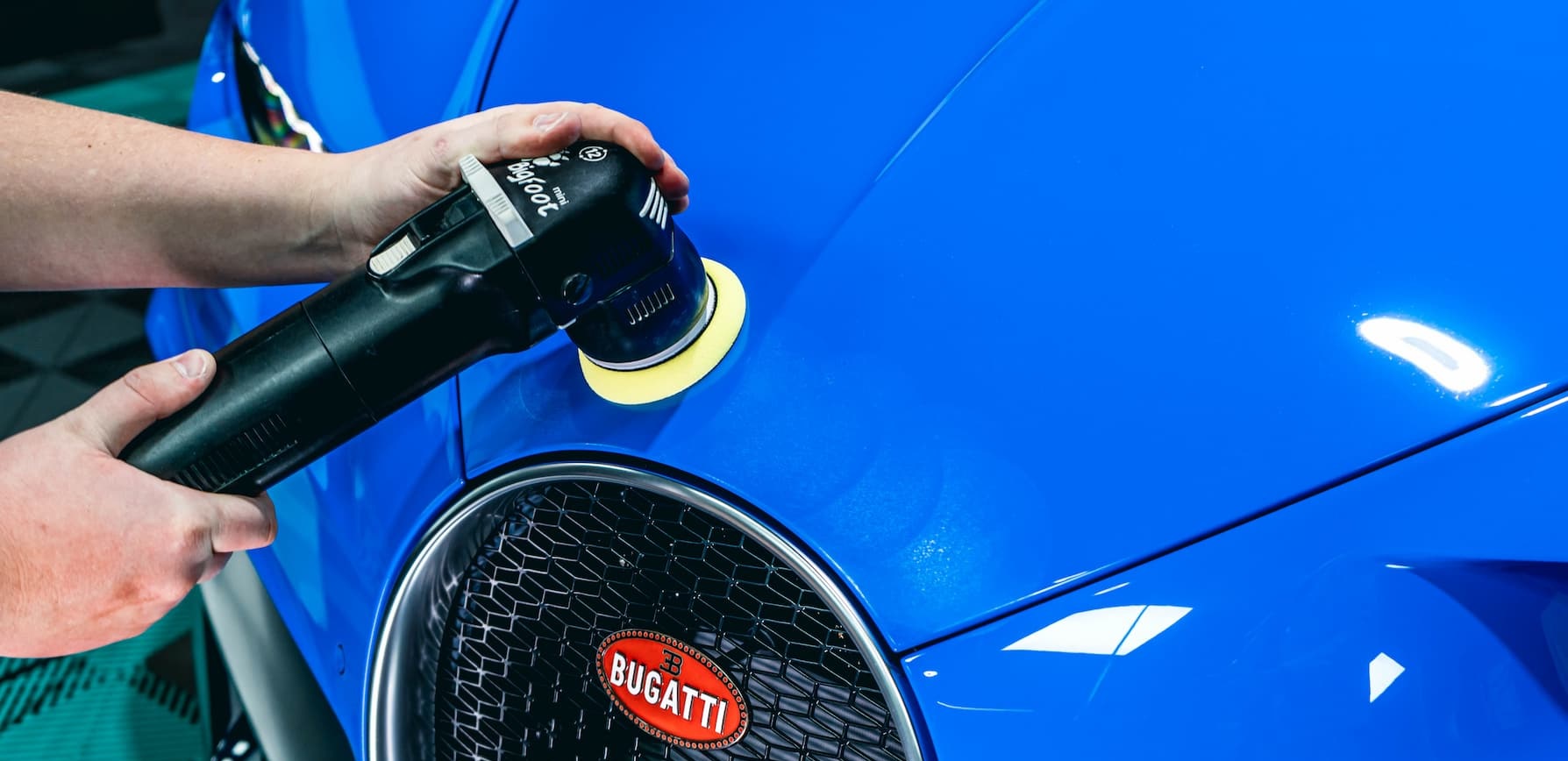
Step 2: Polish the paintwork
Polish the paintwork to remove swirls, light scratches, and imperfections before applying the coating.
Why this is important:
A coating forms a layer over the paint, trapping any imperfections underneath. Anything you don't remove before coating will remain visible for years.
👉 Tip: Have a specialist polish your car if you don't have the right equipment or are unsure about the feasibility.
Step 3: Apply the coating thinly and carefully
Apply the coating in small sections using an applicator and spread it evenly over the surface. Allow the coating to soak in briefly according to the product instructions.
Why this is important:
Applying layers that are too thick or unevenly will cause so-called high spots, which dry hard and are difficult to correct.
👉 Tip: work panel by panel and wipe off the coating immediately with clean microfiber cloths.

Step 4: Cure and protect
Allow the coating to cure for at least 12 to 48 hours without the car getting wet or dirty.
Why this is important:
During curing, the coating gains its hardness, protection, and water-repellent properties.
👉 Tip: work indoors and avoid washing or driving in the rain during the first few days.

What can you expect from coating?
Coating achieves a better end result than wax when it comes to protecting car paintwork. The car paintwork looks better and is easier to maintain, but the process also requires more preparation, knowledge, and precision. Mistakes are difficult to repair and often require repolishing.
PPF: the best complete protection
What is Paint Protection Film?
PPF is a transparent polyurethane film that protects the paintwork against stone chips, scratches, car wash marks, and UV discoloration. It is the only form of protection that actually absorbs impacts, rather than just forming a hard layer. PPF is therefore the best choice for long-term protection of car paintwork against stone chips and other influences that can cause scratches or dents.
Advantages
- The best protection against stone chips
- Self-healing properties for minor scratches
- Protection against discoloration caused by UV radiation
- Available in matte and satin finishes
Disadvantages
- Professional knowledge required for a beautiful end result
- You need professional installation fluids, heat sources, and tools
- Errors remain visible, such as silvering, air bubbles, dirt, and crooked edges
- For optimal coverage, parts must be disassembled
Applying PPf yourself
For small panels or parts, PPF can be applied yourself, but if you want to apply PPF to large surfaces or an entire car, it is practically impossible without training and experience. Installing PPF is a profession, and you can see that in the end result.

Do it yourself or outsource?
Protecting your car's paintwork yourself sounds appealing because you save money, have everything under control, and it can even be a fun challenge. However, not every type of paint protection is equally easy to apply. Below, we list the most important pros and cons so that you know exactly when doing it yourself is a smart choice and when outsourcing is wise.
Advantages of protecting your paintwork yourself
- Cheaper than professional treatments
- Great for DIY enthusiasts
- More control over products and steps
Disadvantages of DIY
- Results depend on experience
- Greater risk of damage, scratches, or streaks
- Mistakes with PPF and coatings cannot be easily repaired
- Parts need to be disassembled for a perfect finish
- Protection does not last as long as professional treatments
PPF offers the best protection for car paintwork, but it also requires the most knowledge and experience. Removing parts is particularly essential with PPF, which is why we remove parts such as bumpers, emblems, lights, and door sills to ensure the film is neatly applied behind the edges. This is difficult and time-consuming for a DIY enthusiast. If you do not have extensive experience, outsourcing is almost always better for peace of mind, quality, and a durable end result.
What is the best protection for car paint?
- The best overall protection is Paint Protection Film (PPF), and in particular Full Protection PPF for those who want maximum protection against stone chips, scratches, and UV radiation.
- If you are mainly looking for shine, ease of maintenance, and chemical protection, then a coating is an excellent choice.
- Want to start simple? Then choose waxing, as this is easy to apply yourself. However, don't expect long-lasting results.
Professionally applied PPF, combined with a coating for the ultimate finish, offers the very best protection and the most beautiful appearance. Contact us for more information or advice.



.avif)
.png)
.png)
.avif)
.png)
.png)
.png)
